If you or someone you love has been diagnosed with sarcoma — or a doctor has raised the possibility — this article will help you understand what you are dealing with. Honest, clear, and without unnecessary fear.
What is sarcoma, in plain language
Our body is made up of many types of tissue. There is skin, there are internal organs, and then there is everything that holds it all together and allows us to move: muscles, bones, fat, cartilage, blood vessels, and nerves. These all belong to what is called connective tissue.
Sarcoma is a cancer that arises from exactly these tissues.
It is not one type of cancer, but a large family of diseases. More than 70 distinct subtypes of sarcoma are known. They differ in which tissue they come from, where they are located in the body, how they behave, and how they are treated.
Sarcomas fall into two main groups:
- Soft tissue sarcomas (~80% of cases) — arise from muscles, fat, blood vessels, and nerves. This is the most common type.
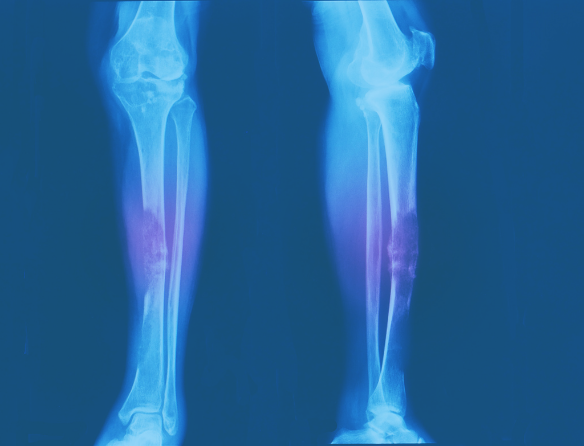
- Bone sarcomas (~20% of cases) — arise directly from bone tissue. The most well-known are osteosarcoma and Ewing sarcoma, which most often affect children and young adults.
Why does sarcoma develop
This is the question every patient asks. And the answer, which may feel unsatisfying, is: in most cases, the exact cause is unknown.
Sarcoma is not the result of an unhealthy lifestyle. It is not something that could have been “prevented” by diet or exercise. This is important to understand — so that you do not blame yourself.
There are certain factors that increase risk:
- Certain inherited genetic syndromes (for example, Li-Fraumeni syndrome, neurofibromatosis)
- Prior cancer treatment with radiation therapy — sarcoma can develop years after exposure
- Prolonged occupational exposure to certain chemicals
- Some viral infections (for example, Kaposi sarcoma )
But in most patients, none of these factors are present. Sarcoma simply occurred — and it is nobody’s fault.
Symptoms: how sarcoma makes itself known
The challenging nature of sarcoma is that in early stages it often causes no pain and does not interfere with daily life. This is why diagnosis is frequently delayed.
The most common first sign is a lump or swelling that is visible or felt on touch. It may slowly grow over weeks or months.
Signs to watch for:
- A new lump anywhere in the body, especially one larger than 5 cm or located deep beneath the skin
- A swelling that grows or does not resolve over several weeks
- Bone pain without a clear injury, especially pain that worsens at night
- Unexplained joint swelling or restricted movement
- Unexplained fatigue, weight loss, or fever
None of these symptoms alone confirms sarcoma — most lumps turn out to be benign. But any of them is a reason to see a doctor, not to wait.
How the diagnosis is made
Diagnosing sarcoma involves several steps. Understanding this process helps you feel less lost and know what to expect next.
Step 1. Physical examination and initial tests
The doctor takes a history, examines the lump, and orders blood tests. At this stage, an X-ray is often requested — particularly if there are bone-related symptoms.
Step 2. MRI or CT scan
MRI (magnetic resonance imaging) is the gold standard for evaluating soft tissue tumors. It shows the size of the tumor, its borders, and its relationship to nearby vessels and nerves. CT (computed tomography) is more often used for bone assessment and to detect lung metastases.
Step 3. Biopsy
This is the most critical step. No sarcoma diagnosis can be confirmed without a biopsy — the removal of a small piece of tissue for microscopic analysis.
The biopsy must be performed correctly and in the right location — this is crucial for what comes next. Ideally, the biopsy should be performed by the surgeon who will later operate, or at least in close coordination with that surgeon.
Step 4. Pathology and molecular testing
The tissue sample is examined by a pathologist. They determine whether the tumor is malignant, which sarcoma subtype it is, and how aggressive it appears (the grade). Modern diagnostics often includes molecular testing — looking for specific genetic alterations that influence treatment choices.
Step 5. Staging
Once the diagnosis is confirmed, staging determines whether the tumor has spread beyond its original site. This usually involves a CT scan of the chest (sarcomas most commonly spread to the lungs) and other imaging as needed.
What “stage” and “grade” mean
Stage (I–IV) describes how far the tumor has spread. Stage I means localized; stage IV means there are metastases in distant organs.
Grade describes how aggressive the tumor cells look under the microscope. Grade 1 is low-grade (less aggressive); grade 3 is high-grade (more aggressive). This is a separate measure from stage, and it heavily influences treatment decisions.
How sarcoma is treated
Treatment depends on the subtype, location, stage, and grade of the tumor. It is always discussed at a multidisciplinary tumor board — where surgeon, oncologist, radiologist, and pathologist together decide what is best for each individual patient.
- Surgery — The primary treatment for most sarcomas. The goal is complete removal of the tumor with clear margins (R0 resection). Modern surgery aims to preserve the limb or organ wherever oncologically feasible. Amputation is far less common today than it was 20–30 years ago.
- Chemotherapy — Effective in certain subtypes — particularly Ewing sarcoma and rhabdomyosarcoma. It may be given before surgery (neoadjuvant) or after (adjuvant).
- Radiation therapy — Used as an addition to surgery — especially when achieving wide resection margins is difficult due to proximity to vessels, nerves, or bone. Also used as the primary treatment for unresectable tumors.
- Targeted therapy — Some sarcomas have specific molecular targets that can be addressed with precision drugs. The clearest example is GIST, which responds remarkably well to imatinib. New targeted agents are emerging for other subtypes.
- Immunotherapy — Currently shows limited efficacy in most sarcomas, but is an active area of research with promising results in select subtypes.
Questions to ask your doctor
After a diagnosis, patients are often overwhelmed and unsure what to ask. Here is a useful starting list:
- What exact subtype of sarcoma do I have?
- What is the stage and grade of my tumor?
- Where will I be treated, and does the team have experience with my specific subtype?
- What is the planned sequence of treatment — surgery first, or chemotherapy first?
- Is limb-sparing surgery possible in my case?
- What side effects should I expect from treatment?
- Are there clinical trials I might be eligible for?
- Should I seek a second opinion?
On second opinions — seeking one is not an insult to your doctor. It is your right and a sensible step with a rare disease. It is especially important that sarcoma treatment takes place at a center with dedicated sarcoma expertise — this has a significant impact on outcomes.
Supporting a loved one with sarcoma
If someone close to you has been diagnosed with sarcoma, you are also going through shock and confusion. That is completely normal.
- Be present, not just “helpful”. Patients often do not need advice or someone searching for the “best doctor in the world.” They need someone to simply be there and listen.
- Do not minimize or catastrophize. Phrases like “everything will be fine” or “this is very serious” are equally unhelpful. Better: “I’m here. What do you need right now?”
- Help with specific things. Driving to appointments, making phone calls, cooking meals — these concrete actions matter more than general promises to help.
- Take care of yourself too. Supporting someone through illness is hard work. Caregiver burnout is real. Allow yourself to need support as well.
The most important thing to remember
Sarcoma is a rare and complex disease — but it is treatable. Outcomes are significantly better when the diagnosis is made early and treatment is carried out by an experienced team.
If you have questions or need help navigating the healthcare system, the Ukrainian Sarcoma Foundation is here to support you.
This material is for informational purposes only and does not replace medical consultation. If you have any symptoms, please consult a specialist. Ukrainian Sarcoma Foundation, 2026.